When Your Brain Breaks…And You Learn How to Heal
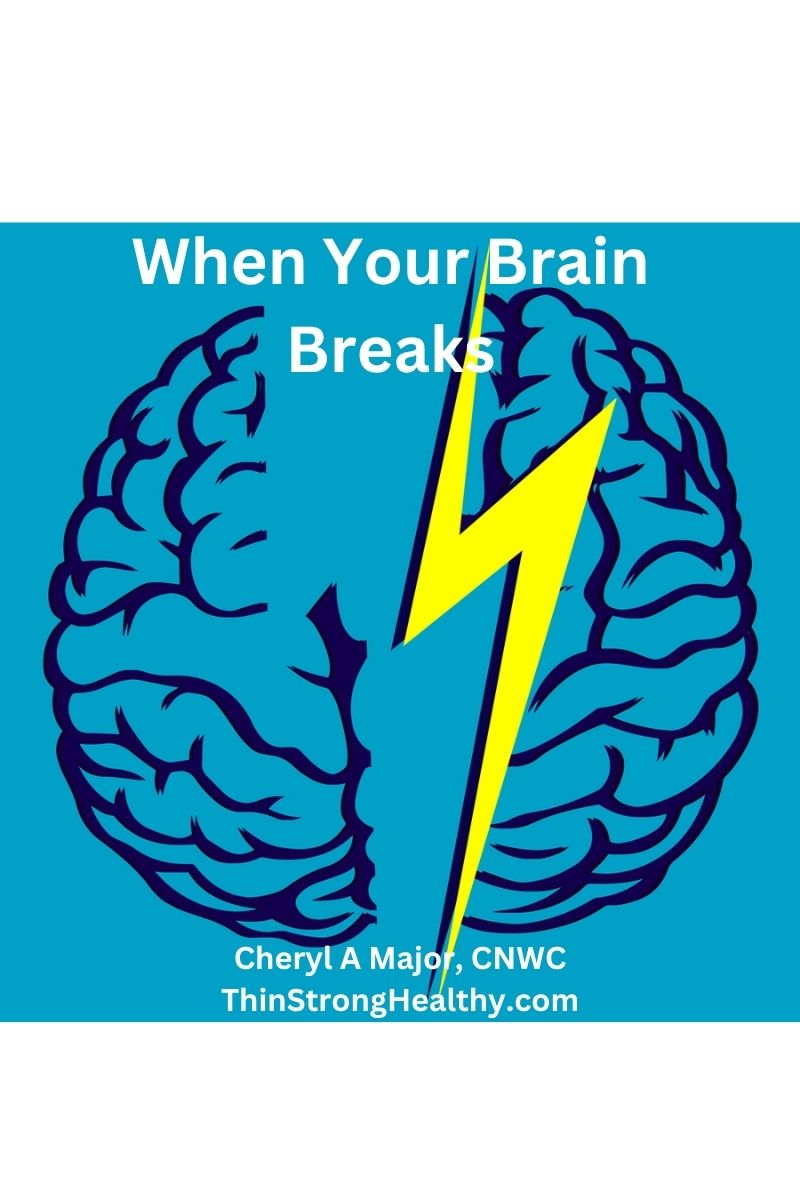
There are moments in life that divide everything into “before” and “after.” When your brain breaks is definitely one of those moments!
One minute you’re moving through your day, managing your life, holding your thoughts together the way you always have… and the next, you step on ice, slide backwards completely out of control until you stop because your head has slammed on that same ice. The bird seed you were carrying is all over the ground and all over you; the cell phone you had in your other hand is within reach which is reassuring.
You get up and continue your day, but slowly you begin to realize something isn’t right.
Suddenly, your brain — the very thing you rely on to navigate through your world — doesn’t feel like yours anymore.
That’s a very unsettling place to be.
The Invisible Nature of Brain Injury
When your brain breaks, one of the hardest parts of experiencing a brain injury is that, from the outside, you may look perfectly fine.
You can smile. You can speak. You can even carry on conversations.
But inside?
Things are slower, foggier, unreliable.
You search for words that used to come easily, or you find a word and realize it’s not the one you were actually looking for. You lose your train of thought mid-sentence. You forget why you walked into a room…more often than might feel normal; maybe you even become a bit unsteady on your feet.
You have a headache that doesn’t go away; in fact, it gets worse every day.
Perhaps most unsettling of all… you begin to question yourself.
Is this real? Am I overreacting? “Why can’t I just push through this?
Because we are so used to trusting our brains, when something feels off, it’s tempting to dismiss it rather than pay attention and investigate it.
The Doubt Is Real
If you’ve experienced a brain injury, you know this part well.
The doubt doesn’t just come from within — it can come from others too.
“You look fine.”
“Maybe you’re just tired.”
“Have you tried getting more sleep?”
Well-meaning? Yes. Helpful? Not necessarily.
What you’re experiencing is real, and it’s often subtle enough that it doesn’t show up clearly on the outside. It is powerful enough to disrupt your entire sense of normal.
Here’s the truth that took me a while to fully accept:
Just because something is invisible doesn’t mean it isn’t significant.
Healing is neither linear nor is it fast.
We live in a world that loves quick fixes. Take this. Do that. Follow this plan for seven days, and you’ll be good as new.
Brain healing doesn’t work that way which is a bummer. It is slower, more layered and you have to be much more patient; the patience required has been one of the really challenging parts for me!
Some days feel almost normal which is encouraging, even hopeful. The next day, the fog rolls back in, the fatigue is back and you feel like you’ve taken ten steps backward.
This can be really discouraging, especially if you’re expecting a straight line.
Healing your brain is more like a twisting country road than it is like a straight superhighway. You revisit the same challenges, but each time with a little more strength, a little more awareness, and a little greater capacity to heal.
Learning to Listen (Really Listen)
One of the unexpected gifts of this experience has been learning to listen to my body in a deeper way.
Before, I could push through fatigue, push through stress, push through discomfort. In fact, when I’ve felt off or sick, I give myself 24 to 48 hours to get over it. That’s all…
Now?
My brain lets me know very clearly when it’s had enough. It’s not a headache now, although I had migraine level 24/7 headaches for weeks. Now, the overwhelm feels more as though my head just kind of “hurts” to let me know it’s time to stop…to back off and rest. I’ve had to learn to respect that.
Rest is no longer optional, pacing is essential, overdoing it has consequences. This has required a level of patience with myself I didn’t always practice before.
It has also opened the door to something else: I’ve had to learn to be, and that is the observer…of myself.

Small Wins Become Big Wins
When your brain breaks and isn’t functioning the way it used to, you begin to appreciate things you may have taken for granted such as:
Remembering something without writing it down.
Following a conversation without losing track.
Completing a task from start to finish.
Doing something you love again…like being with my Lambies!
Believe it or not, these become victories, and there’s something quietly beautiful about that. It brings you back to focus on the present moment in a way hustle and busyness never could. You begin to notice progress in small increments, and those small increments really matter; they become huge wins!
Supporting Your Brain (Gently)
Throughout this journey, I’ve become much more aware of how much our daily choices impact how we feel… physically, mentally, emotionally.
Food matters.
Hydration matters.
Sleep matters.
Calm matters.
Not in an overwhelming, “do everything perfectly” kind of way, but in a gentle, supportive way.
The kind of way that aligns perfectly with what I’ve always believed:
You don’t have to overhaul your life to begin feeling better.
You just need a little “wiggle room”. I love the concept of “wiggle room”. It allows you to give yourself grace along the road to recovery or more specifically, a little intention, a little consistency and a little compassion for yourself along the way.
The Emotional Side No One Talks About Enough
There’s also an emotional component to brain injury that doesn’t get enough attention.
Frustration.
Fear.
Impatience.
Even grief.
In some ways you are adjusting to a version of yourself that feels unfamiliar and that can be hard. Here’s what I’ve come to understand:
You are not broken; you are healing.
Healing, especially when it involves the brain, takes time, care, and a willingness to allow yourself to be where you are — not where you think you “should” be.
What This Has Inspired in Me
This experience has changed me.
Not in a dramatic, overnight transformation kind of way, but in a quieter, more meaningful way.
It has deepened my commitment to helping others understand their bodies and their brains with more compassion and less pressure.
It has reinforced the importance of simple, sustainable habits.
It has inspired me to create more resources, more conversations, and more support for people who may be walking a similar path… even if they don’t fully realize it yet. In fact, I decided to write a book about my journey. I’ve been keeping a journal so I don’t forget the highs and the lows along the way. The title at the present is: “The Brain Comeback Blueprint…Gentle Practical Ways to Rebuild Your Brain and Feel Like Yourself Again”.
Brain health isn’t just something we think about after an injury when your brain breaks, it’s something we need to support every single day!
Moving Forward (Gently)
If you’re navigating something similar, whether it’s a diagnosed brain injury or just a sense that something isn’t quite right, I really want you to hear this and to take it to heart: you’re not imagining it. You’re not weak, and you’re not alone. Give yourself permission to slow down.
Go see your health care professional. That’s something I didn’t do right away, and I should have. My reasons for not going were that my headaches weren’t that bad…yet… and I usually think I can handle things myself in my own way. This time I was very wrong.
Listen to your body. Support your body in ways that feel manageable, not overwhelming. Healing doesn’t come from forcing; healing comes from allowing, from creating space and from giving your brain, and yourself, what you need one small step at a time.
A Final Thought
If there’s one thing this experience has taught me, it’s this: your brain is incredibly resilient.
Given the right support, the right environment, and the right amount of patience… it can heal in ways that are both subtle and profound.
Sometimes, what feels like a setback becomes the very thing that guides you toward a more aware, more intentional, and ultimately more compassionate way of living.
I believe there’s a lesson in what happens to us in life, and I’m trying to figure this one out.
Your questions and comments are always welcome! I love to hear from you.
Helping You Achieve Major Wellness!
Cheryl
I’m author, health coach, and entrepreneur Cheryl A Major, and I would love to connect with you! If you’re new to the world of creating better health, both mental and physical for yourself, please stay tuned for my new book, “Wiggle Room Health”. I’ll show you the way to better health without going nuts!
Be sure to follow me on X (formerly Twitter) so you won’t miss my daily postings for health, wellness and mindset! Please check out the books I’ve written here: Cheryl’s Books


You May Also Like

How Sheep Can Support Mental Wellness